A leader in copper and aluminum processing in Europe. Check us out:
A leader in copper and aluminum processing in Europe. Check us out:

The power industry is one of the sectors where the reliability and durability of components are of paramount importance. Why? Because any failure or loss of conductivity can lead to significant financial losses and even pose a safety risk.
This is why galvanic coatings are very often used. They protect metal surfaces from corrosion, extend the lifespan of entire installations, and, in the case of coatings like silver, improve electrical conductivity. Read on to find out why galvanic plating is widely used in the power industry and what results can be achieved with it!

Galvanic coatings are thin layers of metal that are applied to the surface of another metal in an electrolytic process. In other words, it's the controlled deposition of a protective or functional layer onto a selected material.
In simple terms, a component is immersed in an electrolytic bath, and an electric current causes the deposition of a metal (e.g., tin, silver, or nickel) onto its surface. This creates a galvanic coating that alters the component's performance properties, primarily providing:
The power industry benefits from this technology because galvanic coating significantly increases the reliability of entire systems. Protected surfaces are less susceptible to oxidation and maintain stable parameters over a long service life.

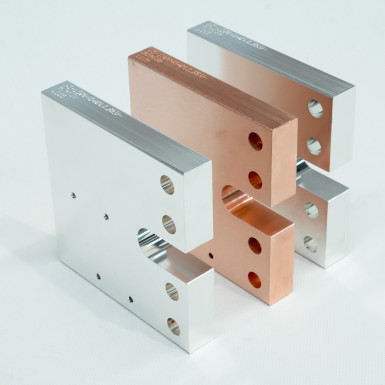
The electroplating of copper and aluminum is particularly crucial for the power industry, as both metals are widely used due to their excellent conductive properties. Coating them with a protective layer increases their resistance to atmospheric and chemical corrosion, improves solderability, and enhances other parameters.
Galvanic coatings are used on many key components of power installations. Components frequently undergoing this process include:
Thanks to galvanic plating, it is possible not only to protect components from external factors but also to improve their functionality, which directly translates into the safe and efficient operation of entire power systems.

Using galvanic plating, the type of layer can be selected based on the desired parameters. In the power industry, three methods of galvanization are particularly common: nickel plating, tin plating, and galvanic silver plating. What are their characteristics?
Nickel plating is a method used where protection against corrosion and abrasion is crucial. A nickel layer is hard and resistant to chemical and mechanical factors, making it suitable for components exposed to harsh environmental conditions.
Advantages:
Tin coatings on copper and aluminum components protect the surfaces from oxidation and corrosion, especially in environments with moisture or contamination. An additional benefit is improved solderability, which allows for durable, conductive connections with low resistance. Although tin's conductivity is lower than copper's, its chemical resistance ensures that contacts remain stable and do not lose their properties over time.
Advantages:
Silvering on the other hand, is used in the most demanding power applications. Silver provides very high electrical conductivity while also protecting the surface from oxidation.
Advantages:
Coating copper with a silver layer protects it from the formation of oxides that could reduce its conductivity. Thanks to such a coating, copper components maintain optimal electrical properties for a long time, even in variable conditions, which increases the durability and reliability of installations in the power and industrial sectors.
Each method has its application: nickel plating is suitable where protection against corrosion and abrasion is key, tin plating is chosen mainly for components requiring soldering and protection from oxidation, and silver plating is used in the most demanding applications where the highest conductivity is required. The final choice depends on the specifics of the project and the operating conditions of the component.

Galvanic coatings are widely used in both power generation and distribution systems, where reliability and efficiency are critical.. In transmission and distribution networks, plated busbars, connectors, and terminals ensure low contact resistance and stable conductivity, even under heavy load or changing environmental conditions. These coatings also minimize maintenance needs, extending the service life of key infrastructure elements.
For power engineering applications, galvanic coatings offer a unique combination of conductivity, durability, and corrosion protection. Tin plating facilitates easy soldering and stable electrical joints, nickel layers add mechanical and chemical resistance, while silver coatings provide the best conductivity for high-performance systems. As a result, components maintain consistent parameters, reducing energy losses and enhancing operational safety across the entire power network.
If you're looking for the highest quality protection for power components, you can trust the experience of Electris. We specialize in processes such as electroplating of copper and electroplating of aluminum. We offer the application of nickel, tin, and silver coatings, as well as combining galvanic coatings and powder coatings (epoxy or polyester paints) on a single component.
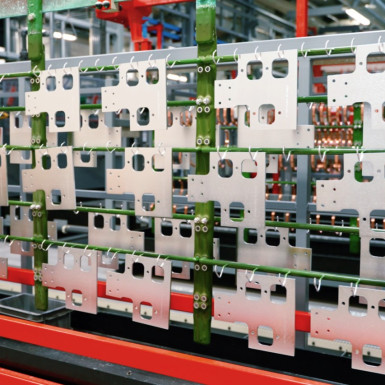
We have a modern, fully automated electroplating plant that allows us to handle even the most demanding projects. Our advanced technological facilities enable us to provide precise, durable, and functional coatings that meet the requirements of modern power engineering.
Our solutions are used, among other things, in the production and protection of busbars, current bars, bus ducts, connectors, clamps, and other elements of power infrastructure. By choosing Electris, you gain not only durability and safety but also the assurance that all processes are carried out in accordance with the highest quality standards.
Have questions? Feel free to contact us! Write us at sales@electris.pl
I use cookies to ensure basic site functionality and improve your online experience. You can choose for each category to opt-in at any time. For more information on cookies and other sensitive data, please see the full privacy policy and cookie policy.
If you have any questions about our cookie policy, please contact us.