A leader in copper and aluminum processing in Europe. Check us out:
A leader in copper and aluminum processing in Europe. Check us out:

Server rooms and Data Centers are crucial links in the IT infrastructure chain, which is why every technological element must operate reliably. High humidity, fluctuating temperatures, or air contamination can cause corrosion and damage to metal components.
How can we protect components, control cabinets, switchgear, and entire server rooms from these hazards? The use of specialized technical coatings is firmly established as an operational standard for modern IT infrastructure. Learn about their functional parameters and the justification for their implementation in Data Center and server room environments.

Technical coatings are specialized protective layers applied to metal elements to significantly optimize their parameters. Their primary function is to increase the resistance of the base material to a range of degradation factors: corrosion, abrasion, oxidation, and mechanical damage. Depending on the environmental requirements of a given installation, these coatings can serve insulating, protective, or functional purposes (e.g., improving electrical conductivity or surface hardness).
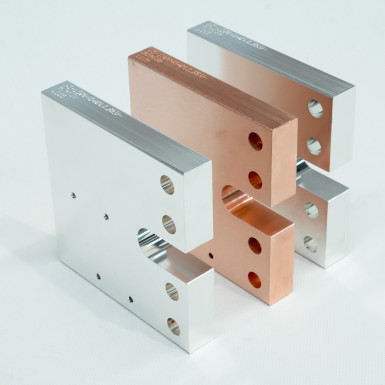
In the context of server rooms and critical infrastructure, the most important function of technical coatings is to minimize asset degradation and maintain operational continuity. Galvanic coatings (silver plating, nickel plating, tin plating) play a crucial role here. Applied to copper and aluminum components (e.g., busbars), they guarantee the durability of contact points and maximum current conduction efficiency. For example, galvanic silver—due to its lowest resistivity—ensures minimal energy loss and transmission reliability under demanding operating conditions. These coatings provide a reliable anti-corrosion and anti-abrasion barrier, which is essential in environments where factors like high humidity, air contaminants, or temperature fluctuations could lead to oxidation and component failure.
In the Data Center environment, where long-term reliability is also key, insulating coatings such as epoxies or polyesters are often applied to metal components. Powder-coated paints create a compact insulating and anti-corrosion barrier, protecting elements from moisture, chemicals, and mechanical damage.
The integration of both types of coatings on a single component (galvanic at the contact point, powder on insulated areas) allows for selective functional control, optimizing both conductivity and insulation according to restrictive industry specifications.

Which coating is best? Everything, of course, depends on the target application—in server rooms and Data Centers, anti-corrosion, conductive, and anti-oxidation coatings are typically used.
In environments with high demands, such as server rooms and Data Centers, specialized technical coatings (both galvanic and powder) fulfill a critical protective function. They minimize the risk of failure and asset degradation by preventing corrosion and short circuits, significantly extending the lifespan of key installation components. By introducing this technology during the design or modernization phase of infrastructure, operation costs can be optimized, and the maximum reliability of the entire system can be ensured. Here are some examples of their applications!
Metal racks, guides, brackets, and frames in rack cabinets operate under conditions of elevated humidity, variable temperatures, and continuous airflow that carries dust and fine particles. This combination of negative factors favors corrosion and slow surface degradation.
The application of a galvanic layer, such as zinc or nickel, creates an effective protective barrier that shields the metal from oxidation, mechanical damage, and deformation. As a result, the structure of the rack cabinets remains stable and resistant to long-term operation, even in the most demanding IT environments.

Electrical connections and contacts are susceptible to surface oxidation, leading to a decrease in conductivity and the risk of system interruptions. In server rooms, where power stability and data transmission are absolutely crucial, such phenomena can cause serious consequences.
Galvanic coatings of silver, nickel, or tin fulfill a dual engineering function. Firstly, they protect contacts from oxidation and contaminants, which lead to increased resistance. Secondly, silver coatings—due to their lowest resistivity—maximize the conductivity of connections. The use of a correctly selected galvanic coating ensures that connections maintain stable transmission and power parameters for years, minimizing the risk of IT infrastructure failure and downtime.
Power busbars, switchgear, and grounding elements are responsible for the safe and uninterrupted operation of the entire system. The flow of high currents generates heat, and any micro-damage can lead to localized overheating or sparking.
Technical coatings applied to these elements increase corrosion resistance, protect against oxidation, and improve conduction stability. Additionally, they limit deposit formation and ensure connection durability, allowing the power infrastructure in the server room to operate safely and efficiently.
In modern Data Centers, busbars (bus ways) are increasingly used as an alternative to traditional power cabling. They allow for safe and flexible power distribution over long distances, while taking up less space and facilitating future infrastructure expansion. However, their enclosures and contact elements are exposed to intensive current flow, vibrations, elevated temperature, and moisture.
The application of galvanic coatings, such as nickel plating or tin plating, protects busbars from corrosion, improves connection quality, and increases the durability of current contacts. These protections minimize the risk of component overheating, thus reducing the possibility of failure or downtime. Thanks to appropriate protection of metal surfaces, busbars maintain high conduction quality and mechanical stability throughout their operational life, which translates into the energy security of the entire server room.

Server rooms generate huge amounts of heat, so cooling systems must be reliable and resistant to environmental factors. Pipes, fixings, clamps, grilles, and other metal elements are constantly exposed to moisture and water vapor condensation, which accelerates corrosion.
The use of galvanic coatings increases the metal's resistance to water, chemicals used in HVAC installations, and mechanical damage resulting from vibrations or temperature changes. As a result, cooling systems operate more stably, and the risk of leaks, cracks, or failures is significantly reduced.
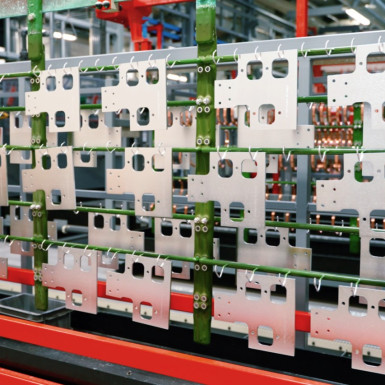
Technical coatings are gaining the status of a mandatory standard in environments with high reliability requirements, such as server rooms and Data Centers. Responding to this key need, Electris offers advanced coating services (galvanization, powder coating, selective coatings, and the combination of coatings with different functionalities on a single component).
Thanks to many years of experience and state-of-the-art automated technological lines, we guarantee the highest quality repeatability and compliance with restrictive technical parameters while maintaining optimal delivery times. Want to know more or use our offer? Feel free to contact Electris Coating Systems — email us at sales@electris.pl!
I use cookies to ensure basic site functionality and improve your online experience. You can choose for each category to opt-in at any time. For more information on cookies and other sensitive data, please see the full privacy policy and cookie policy.
If you have any questions about our cookie policy, please contact us.