A leader in copper and aluminum processing in Europe. Check us out:
A leader in copper and aluminum processing in Europe. Check us out:

Electroplating has been used in industry for years due to its positive impact on the durability and aesthetics of metal products.
Its applications and effects on various elements are fascinating, but equally interesting is its journey to becoming a key process in many aspects of modern life. Let’s explore the history of electroplating and answer an essential question – why do we use it today?

The history of electroplating, which involves coating metal surfaces with thin layers of other metals, dates back to the 18th century. Although the process wasn’t yet invented at the time, the groundwork for its development was laid.
Two key figures played significant roles in this journey. Luigi Galvani discovered electrical phenomena in animal tissues, which drew attention to the field of electrochemistry – crucial for electroplating. Alessandro Volta, building on Galvani’s discoveries, observed that electricity is generated by metals immersed in an electrolyte. He was the first to demonstrate the effects of various metals and created the first galvanic cell, also known as Volta’s cell.
These discoveries led scientists in the 19th century to use electric currents to coat metal objects with other metals. The most significant achievement came from Italian chemist Luigi Brugnatelli, who first coated silver with a thin layer of gold using electrolysis. Although his work was not appreciated by Napoleon Bonaparte, it was published in Belgian newspapers and inspired further scientific progress.
The process of electroplating with zinc (thus protecting iron from corrosion) was officially patented in 1837 by French engineer Stanislas Sorel. Three years later, George Richard Elkington and H. de Ruolz patented the methods for electro-gilding and electro-silvering, revolutionizing the jewellery industry. London industrialist Henry Palmer also contributed significantly by introducing galvanized steel plates for roofing.

These discoveries spurred further advancements in metal electroplating. In the 19th century, Carl Wilhelm Siemens developed more precise methods for controlling the thickness of electroplated layers. This allowed for greater protection and refinement of various products.
By the 20th century, electroplating had become a standard technique for protecting steel and iron from corrosion, especially in industries such as construction, automotive, and shipbuilding. Electro-galvanizing was widely used in manufacturing pipes, sheets, and industrial components, even during World War I and II. Metals such as nickel and chrome were also introduced, adding both protective and aesthetic qualities.
Today, electroplating is a complex set of processes that improve the mechanical and electrical properties of metal elements, enhancing their durability, reliability, and aesthetics. Electroplating is most commonly used to:
Electroplating is applied to a wide range of metal products, including fasteners (e.g., bolts and nuts), pipes, sheets, fences, gates, automotive parts, tools, jewellery, and even furniture. Industrial electroplating is present in nearly every aspect of our lives, improving the quality and durability of the objects we use daily or that surround us.

While early discoveries laid the theoretical foundations of electroplating, it was the work of 19th- and early 20th-century scientists and engineers that transformed it into a practical, scalable industrial process. Their inventions, improvements, and standardizations have had a lasting impact on modern electrochemistry and industrial metal finishing. Below are some of the most influential individuals and institutions whose contributions helped establish electroplating as a cornerstone of manufacturing and electrical engineering.
In 1834, Michael Faraday formulated the laws of electrolysis, which laid the scientific foundation for electroplating. His discoveries explained the relationship between electric current and the amount of material deposited during electrolysis, making the process predictable and controllable.
Together with Henry Elkington, he patented the first commercial electroplating process in 1840. Using a cyanide-based silver electrolyte, they established one of the first electroplating businesses in Birmingham, revolutionizing the jewellery and silverware industries.
Independently from Elkington, Böttger developed a silver electroplating process using potassium cyanide in Germany. Although Elkington patented it first, Böttger's contributions were crucial to spreading the technique across Europe.
An American electrochemist who helped popularize and standardize electroplating techniques in the United States during the late 19th century. He contributed to improvements in plating baths and electrical equipment used in the process.
Co-developed the "Adams electroplating process," which enabled uniform gold and silver plating on complex surfaces. His work was key to mass production of electroplated components in the U.S.
Pioneered industrial-scale electroplating in America. He improved current control in plating baths and developed reliable instruments for measuring electrical parameters during electrolysis.
A key figure in the development of pulse electroplating and plating on non-metallic surfaces. His research expanded the applicability of electroplating in electronics and precision engineering.
Inventor of the widely used "Watts bath" – a nickel plating solution composed of nickel sulfate, chloride, and boric acid. His formula, developed in 1916, remains the industry standard for nickel electroplating.
Founded in 1909, the society brought together scientists, engineers, and industrial practitioners. It played a pivotal role in standardizing practices, advancing research, and training professionals in the field of electroplating.
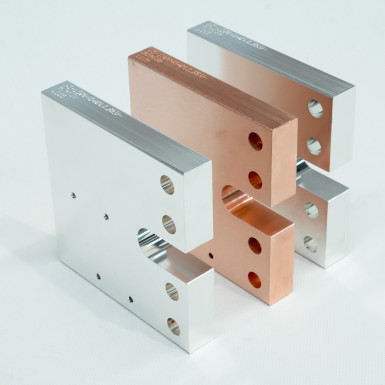
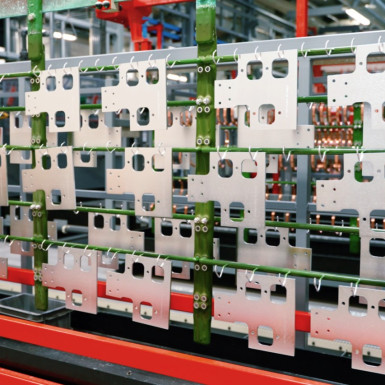
At Electris, we offer electroplating services for copper and aluminium alloys. Our coatings create a durable layer on the surface of treated items, providing enhanced conductivity and resistance to external factors and mechanical damage. To meet the needs of our customers, we perform various electroplating processes:
Each process delivers different results. If you want to learn more, check out our article titled Electroplating Metals – What It Is and the Different Types.
If you’re interested in a customized electroplating offer for copper or aluminium components, contact us at: sales@electris.pl.
I use cookies to ensure basic site functionality and improve your online experience. You can choose for each category to opt-in at any time. For more information on cookies and other sensitive data, please see the full privacy policy and cookie policy.
If you have any questions about our cookie policy, please contact us.